By Dan Joffe, lawyer at NextLaw (LSO #37145V) · Published October 1, 2026 · Last updated October 1, 2026 · Ontario, Canada
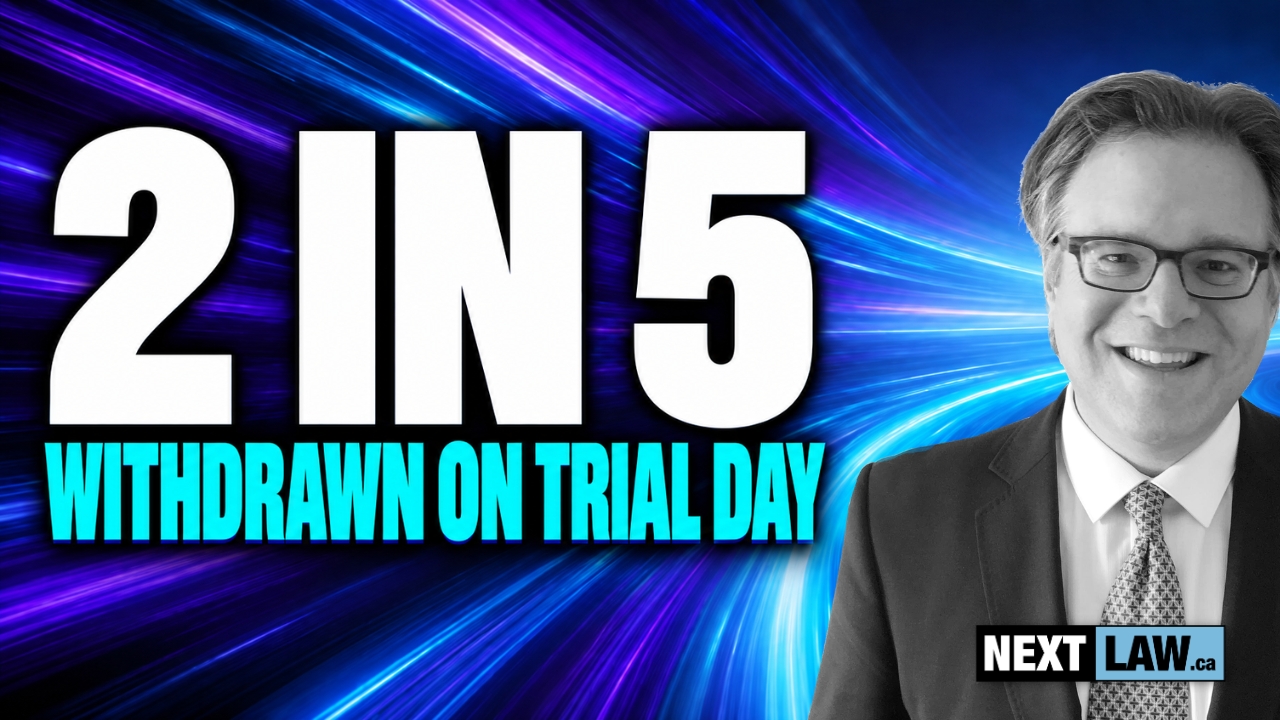
Short answer: Before you pay a speeding ticket in Barrie, see what the court data shows: in Barrie, the trial date is where a speeding ticket gets decided. According to NextLaw Analysis of Ontario Court of Justice data, since 2023 about 2 in 5 Barrie speeding charges that reached a trial date were withdrawn that day (41%), against 27% across Ontario. From 2015 to 2019 it was about 1 in 5 (22%), matching the rate across Ontario. The rate nearly doubled, on a trial docket the same size as before speed cameras. The data can't tell you what happens to your insurance, but it shows where your ticket gets decided.
https://youtu.be/NYrj3EgZVS8
Speeding ticket Barrie: what the court data shows
Barrie's trial-day withdrawal rate for speeding charges went from 22% in 2015–2019, matching Ontario, to 41% in 2023–March 2026, against 27% across Ontario. Source: NextLaw Analysis of Ontario Court of Justice, Provincial Offences Court Statistics.
We analyzed eleven years of Ontario Court of Justice data, 2015 through March 2026, for speeding charges under Ontario's Highway Traffic Act (section 128), what most people just call a speeding ticket. We compared the Barrie court with the other Ontario courts and with the province as a whole. Barrie's Provincial Offences court, at 45 Cedar Pointe Drive, serves all of Simcoe County, not just the city (City of Barrie, Provincial Offences Court System).
The finding: from 2015 to 2019, about one in five Barrie speeding charges that reached a trial date was withdrawn that day. That was 22%, the same as the rate across Ontario. Since 2023, it has been about two in five: 41%, against 27% across Ontario. A withdrawn charge ends without a conviction. These figures count charges, not drivers, so they are not the odds for any one ticket.
Withdrawn on the trial date2015 to 20192023 to March 2026Barrie22%41%Ontario, all courts22%27%Share of speeding charges (Highway Traffic Act s.128) reaching a trial date that were withdrawn on that date, pooled periods. Source: Ontario Court of Justice, Provincial Offences Court Statistics (2015–2019; 2023–March 2026); NextLaw Analysis.
Even before the rise, Barrie ranked above most individual courts on this measure: it matched the Ontario-wide rate but sat at the 85th percentile of 52 Ontario courts. Since 2023, its rate has ranged from 35% to 47% across four reporting periods, in the top fifth of Ontario courts in three of the four.
Source: Ontario Court of Justice, Provincial Offences Court Statistics (2015–March 2026); analysis by NextLaw.
A rise that isn't a speed-camera effect
Since 2023, Barrie's speeding trial docket has run at 1.0 times its 2015–2019 level while Ontario's is at 0.8 times, so the rise in trial-day withdrawals is not a speed-camera effect. Source: NextLaw Analysis of Ontario Court of Justice, Provincial Offences Court Statistics.
Barrie's trial docket, the number of speeding charges reaching a trial date, is the same size as before automated speed cameras. From 2015 to 2019, an average of 7,139 Barrie speeding charges a year reached a trial date. Since 2023, the docket has run at 1.0 times that pre-camera level. Across Ontario, it is 0.8 times its pre-camera size.
If camera tickets had crowded Barrie's trial dates, the docket would have grown. It didn't. Barrie's speed cameras ran only from 2024 to November 2025, and camera tickets almost never reached a trial date. In practice, Barrie's trial dates are about officer-issued tickets, the kind that carry demerit points.
Three in four Barrie pleas came on the trial date
In 2015–2019, three in four Barrie speeding pleas (76%) were entered on the trial date, against about half (52%) across Ontario. A plea can be to a lower speed; it is not a loss rate. Source: NextLaw Analysis of Ontario Court of Justice, Provincial Offences Court Statistics.
In Barrie, cases settle on the day. Before speed cameras, from 2015 to 2019, three in four Barrie pleas (76%) were entered on the trial date, against about half (52%) across Ontario. That put Barrie at the 92nd percentile of Ontario courts, and in the top fifth in three of the five years; year to year, its share ran from 58% to 90%.
Across Ontario, about half of pleas come earlier, for example at an early resolution meeting with the prosecutor. In Barrie, most come on the day. A plea can be to a lower speed, so these figures are not a loss rate. The data counts charges, not drivers.
Why Barrie's trial dates look like this: our read
Our read at NextLaw is this: much of Barrie's trial docket is highway traffic, ticketed by OPP officers who patrol a wide territory. Getting that officer to a fixed court date is harder than for a city beat, and it shows on the trial date.
The data can't confirm that. It doesn't record who wrote the ticket, and it doesn't record why a charge was withdrawn.
What to do after a speeding ticket in Barrie
After a Barrie speeding ticket you have 15 days to choose: paying or resolving early gives up the trial date, and at a trial date you, or someone for you, must attend. Source: NextLaw Analysis of the Provincial Offences Act and Ontario Court of Justice statistics.
In Barrie, paying or settling early gives up the trial date, the day these numbers are about. After you get a speeding ticket, you have 15 days to choose one of three options under the Provincial Offences Act:
- Pay it. Paying is a guilty plea, and the conviction goes on your record.
- Meet the prosecutor for an early resolution. If you reach a resolution, it happens before the trial date.
- Ask for a trial. This keeps the trial date.
The flip side: since 2023, about one in six Barrie speeding charges reaching a trial date (17%) ended in a conviction because nobody showed up. If you live in the GTA, the drive back to Barrie is the real hurdle. You, or someone for you, has to be there: a lawyer or licensed paralegal can appear on your behalf (Provincial Offences Act, section 84).
★★★★★
They were very timely, knowledgeable and great at keeping me up to date. I was out of town for my court dates and they took care of everything.
— Kathy Z., verified 5-star Google review
A plea to a lower speed can reduce or remove demerit points, but it doesn't erase the conviction. The insurance effect depends on the tier crossed and your insurer's rules; our guide to whether a speeding ticket increases insurance in Ontario explains how. If you are weighing your options, our breakdown of whether it's worth fighting a speeding ticket in Ontario sets out the trade-off.
Got a speeding ticket in Ontario? Don't pay it yet. Not every ticket is worth fighting. But every ticket is worth checking. Our free insurance calculator asks 7 quick questions to see how much your insurance could go up. Get your number first. Then, if it makes sense, book a free call for a straight answer.
To see how other courts compare, read our court data for Brampton and Hamilton, plus our look at what happens on the trial date across Ontario.
How the camera years were handled
Plea figures use camera-free 2015–2019 and trial-day figures use 2023 to March 2026; speed cameras operated in Ontario from July 2020 until the November 14, 2025 ban, and in Barrie from 2024. Source: NextLaw Analysis of Ontario Court of Justice, Provincial Offences Court Statistics.
Speed cameras operated in Ontario from July 2020 until they were banned on November 14, 2025 (Bill 56). Camera tickets were issued to the vehicle owner, carried no demerit points and never touched a driving record. Because they distorted how many tickets were issued and how many were simply paid, this analysis uses the five camera-free years, 2015 to 2019, for those measures, confirmed against the first post-ban months of 2026. It uses the most recent three years only for what happens on the day of trial, where camera tickets almost never reached. Barrie's cameras ran only from 2024 to November 2025, and its trial docket since 2023 is 1.0 times its pre-camera size. Every figure on this page covers Highway Traffic Act section 128 speeding charges only.
Quick answers
Do cops show up to court for speeding tickets in Ontario?
The court data doesn't record attendance, and it doesn't record why a charge was withdrawn. Our read: most of the time they do, so a trial request should never be a bet on an empty chair.
How much is a 40 over speeding ticket in Ontario?
40 over is a speeding ticket only on a road posted 80 to 100 km/h ($240 set fine, $295 with surcharge and costs, 4 demerit points); under 80 km/h, or at 150 km/h or more, it is stunt driving, a separate charge. Sources: O. Reg. 455/07, Ontario Court of Justice set fines, O. Reg. 161/00 and O. Reg. 339/94; compiled by NextLaw Analysis.
It depends on the road. Where the limit is under 80 km/h, 40 over is stunt driving, not speeding (O. Reg. 455/07), a separate and more serious charge. On a road posted 80 to 100 km/h, it's speeding: a $240 set fine (Ontario Court of Justice set fines) plus a $50 victim fine surcharge and $5 in costs, $295 in total, and 4 demerit points (O. Reg. 339/94). At 150 km/h or more, it's stunt driving on any road.
What is the best defense against a speeding ticket?
A speeding charge has to be proven through the officer's evidence, including how the speed was measured. The defence starts with full disclosure and holding the prosecution to that proof. No outcome is guaranteed. Our guide on how to fight a speeding ticket in Ontario walks through the steps.
About NextLaw
NextLaw is a speeding ticket law firm based in Toronto, representing drivers in every court in Ontario, including Barrie. This article was written by Dan Joffe, lawyer at NextLaw (Law Society of Ontario #37145V). For speeding ticket inquiries, call 647-558-2679. Court statistics current as of March 2026; this is general information about Ontario law, not legal advice about your specific case. https://www.nextlaw.ca/?p=36304
Comments
Post a Comment