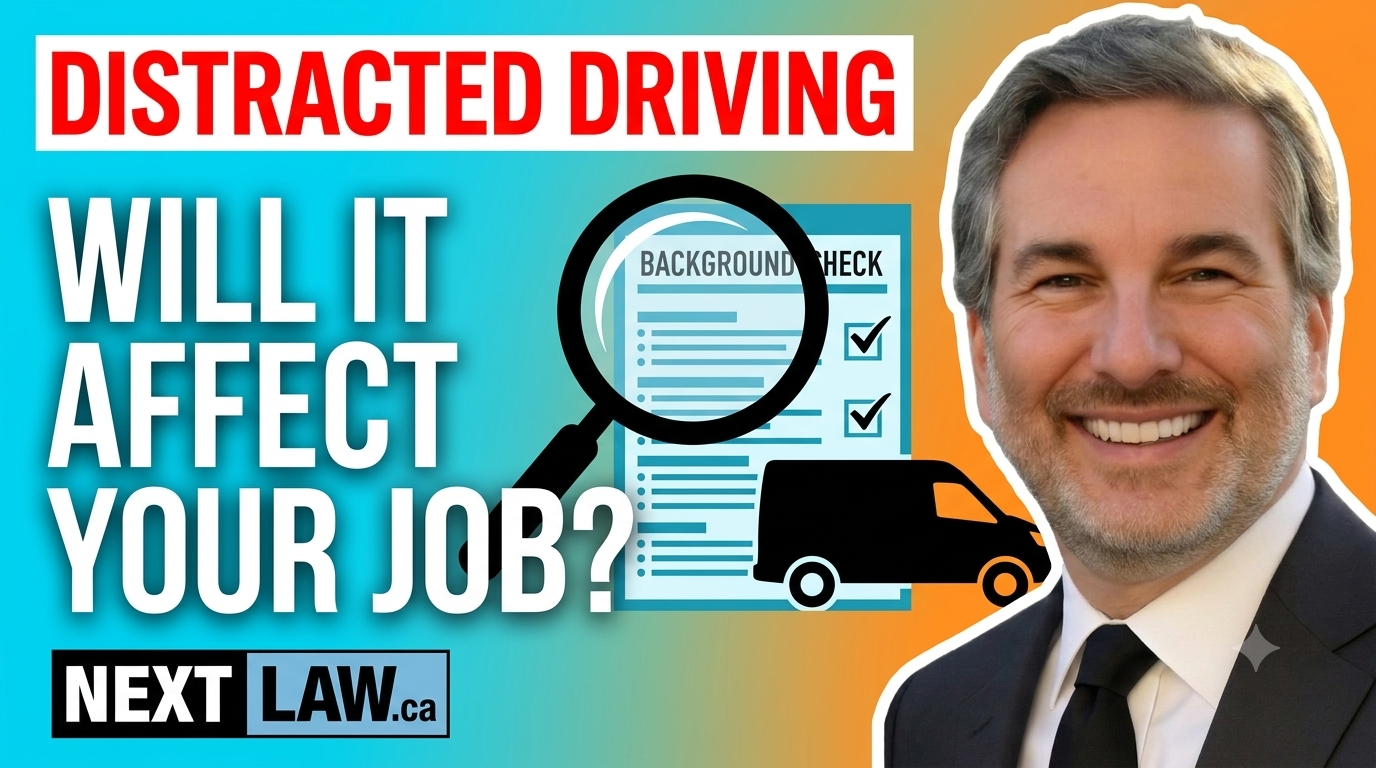
A distracted driving ticket in Ontario is a provincial offence under the Highway Traffic Act — not a criminal charge — so it does not go on your criminal record and won't show up on a standard criminal background check. The important exception is your job: if driving is any part of what you do, the conviction lands on your driver's abstract, where an employer or their insurer may see it and it can genuinely matter.
I'm Jon Cohen, Partner at NextLaw, a distracted driving ticket law firm in Ontario. Here's when a ticket touches your job — and when it doesn't.
Is distracted driving a criminal record in Ontario?
First, the good news. Distracted driving is a provincial offence under the Highway Traffic Act — it is not a criminal charge.
So a distracted driving conviction does not go on your criminal record, and it won't show up on a standard criminal background check. For most jobs, an employer running a criminal check simply won't see it. For a lot of people, that's the reassurance they were looking for.
When can a distracted driving ticket affect your job?
But there's an important exception. A distracted driving conviction does go on your driving record — your driver's abstract.
So if your job involves driving at all — a commercial licence, delivery, rideshare, or driving a company vehicle — your employer, or their insurer, may see it, and it can genuinely matter. For those roles, the conviction and the insurance impact that comes with it can become a real problem, even though it never touches your criminal record.
Why keeping it off your record matters if you drive for work
So whether this ticket touches your work really depends on what you do for a living. But if driving is any part of your job, a conviction sitting on your abstract is worth taking seriously — and once you've paid the ticket, it's on there to stay.
That's exactly why it's worth understanding your options before you decide how to handle it. Every case is different, but for anyone who drives for a living, the abstract is where the real risk lives — and it's the part you can still do something about while the charge is open.
Frequently asked questions
Does a distracted driving ticket go on your criminal record in Ontario?
No. Distracted driving is a provincial offence under the Highway Traffic Act, so a conviction does not go on your criminal record or appear on a standard criminal background check.
Will a distracted driving ticket show up on a background check?
Not on a standard criminal background check. But it does appear on your driver's abstract, which employers who require driving may check.
Can distracted driving affect a job that involves driving?
Yes. For commercial, delivery, rideshare, or company-vehicle roles, the conviction on your abstract — and the insurance impact — can genuinely affect your employment.
Does distracted driving go on your driver's abstract?
Yes. A distracted driving conviction is recorded on your driving record, which is what a driver's abstract shows, and it stays there after you pay the ticket.
This article is general information about Ontario law and is not legal advice. Services provided by a licensed lawyer and licensed paralegals at NextLaw. Every case is different; past results do not guarantee future outcomes. https://www.nextlaw.ca/?p=35570
Comments
Post a Comment