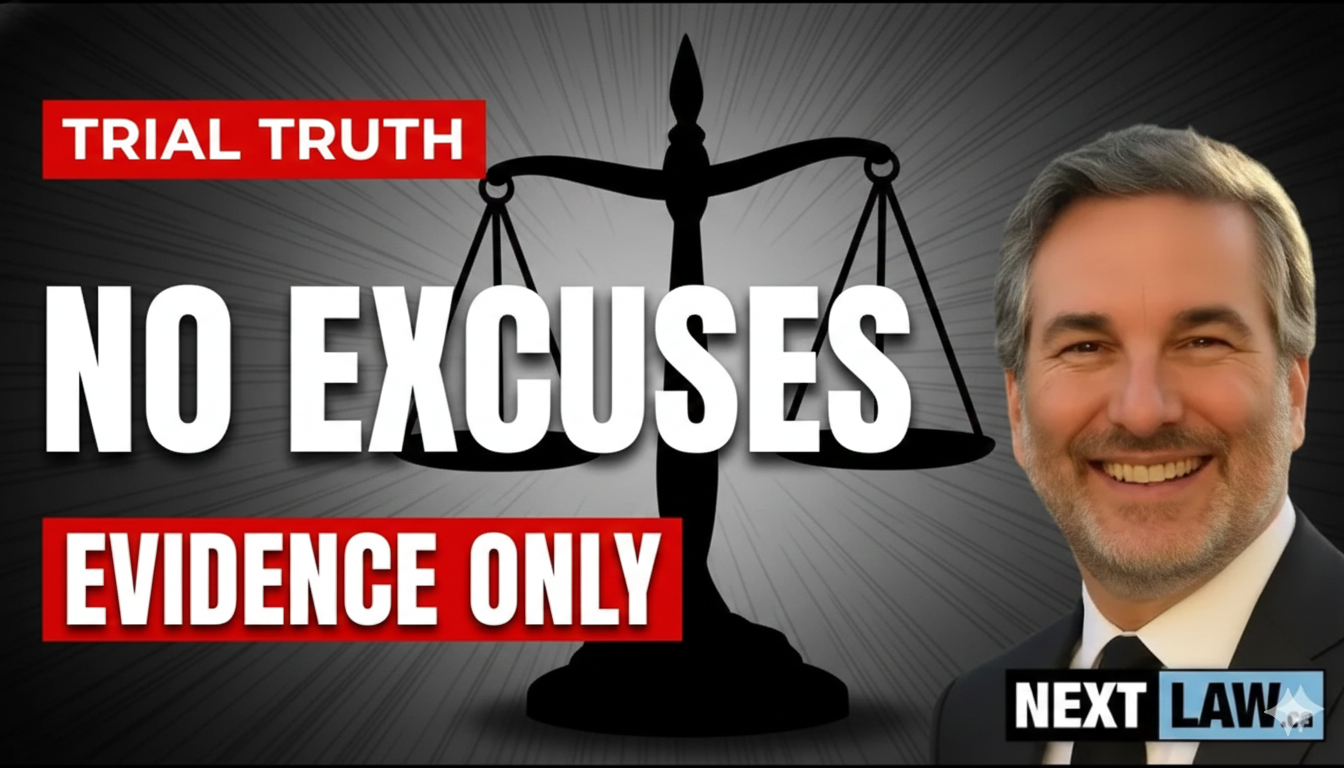
Why Evidence Matters More Than Your Story at Traffic Court
If you're planning to fight your speeding ticket, there's a fundamental reality you need to understand: courts decide cases based on evidence, not emotional appeals. Many drivers undermine their cases by focusing on the wrong things.
What Courts Actually Care About
What courts focus on:
- Was the speed measurement device properly calibrated?
- Was the officer properly trained to operate it?
- Were the correct procedures followed?
- Does the evidence actually prove you were travelling at the alleged speed?
- Is there reasonable doubt about any element of the prosecution's case?
What courts don't care about:
- Whether you're usually a careful driver
- Whether you need your license for work
- Whether the fine will create financial hardship
- Whether you think the speed limit was too low
- Whether the officer was rude or seemed to be targeting you
- Whether you were having a bad day
The Emotional Appeal Trap
The Justice's job is to determine whether the prosecution has proven the charge beyond reasonable doubt. That's a legal question about evidence—not a question about your character, circumstances, or feelings.
When you stand before the court and talk about how much you need your license or how you've never had a ticket before, you're not addressing the actual question. You might be sympathetic, but sympathy doesn't create reasonable doubt. The Justice will likely tune it out.
Common Ineffective Arguments
Arguments that consistently fail:
- "I need my license for work." Every speeder needs their license for something. This doesn't change whether you were speeding.
- "I've never had a ticket before." Your history doesn't affect whether you committed this offense.
- "The officer was rude/seemed to be targeting me." The officer's demeanor doesn't change the radar reading.
- "Traffic was flowing at that speed." Other people speeding doesn't make your speeding legal.
- "I wasn't speeding." Simply denying the charge without challenging the evidence isn't a defense.
What Effective Defense Looks Like
What actually works:
- Challenging calibration records—showing the device may not have been accurate
- Questioning officer training—showing they may not have operated the device correctly
- Identifying procedural issues—showing required steps weren't followed
- Creating doubt about targeting—questioning whether your vehicle was actually measured
These are evidence-based challenges. They address whether the prosecution can prove their case, not whether you deserve sympathy.
The Court's Perspective
From the court's viewpoint, you're a defendant charged with a provincial offense. They see many defendants daily, most of whom have reasons they don't want to be convicted. The court's job isn't to decide who deserves conviction least—it's to apply the law to the evidence.
Understanding this helps you prepare effectively. Focus on the evidence, not your story.
The Insurance Stakes at Trial
What happens at trial directly determines your insurance costs for the next three to six years. A 15 km/h over conviction costs $510–$1,200 over three years in insurance increases. A 30+ km/h over conviction costs $1,785–$4,335 over three years. A complete dismissal at trial means those costs are $0. This insurance reality is why evidence-based defense matters so much—the financial difference between conviction and acquittal extends far beyond the courtroom.
Making Evidence Your Focus
If you want to succeed in fighting your speeding ticket, focus on evidence. Analyze the disclosure. Identify weaknesses in the prosecution's case. Prepare questions that challenge the reliability of the speed measurement. This approach gives you your best chance of success.
Not every ticket is worth fighting—but every ticket is worth checking. Book a free call to discuss your disclosure and evidence-based defense options.
This article is based on NextLaw's professional analysis of Ontario speeding legal procedures and is provided for informational purposes only. Every case presents unique circumstances, and outcomes depend on specific case facts and proper legal representation. https://www.nextlaw.ca/2026/02/21/evidence-not-emotion-speeding-ticket-ontario/
Comments
Post a Comment